
China and North Korea Open New Bridge After a 12-Year Pause to Confirm They Were Still Friends
The New Yalu River Bridge was due to open in 2014. It opened this week, which Beijing calls a new chapter in a friendship that is as close as lips and teeth. Our foreign correspondent has been watching it from the basement.

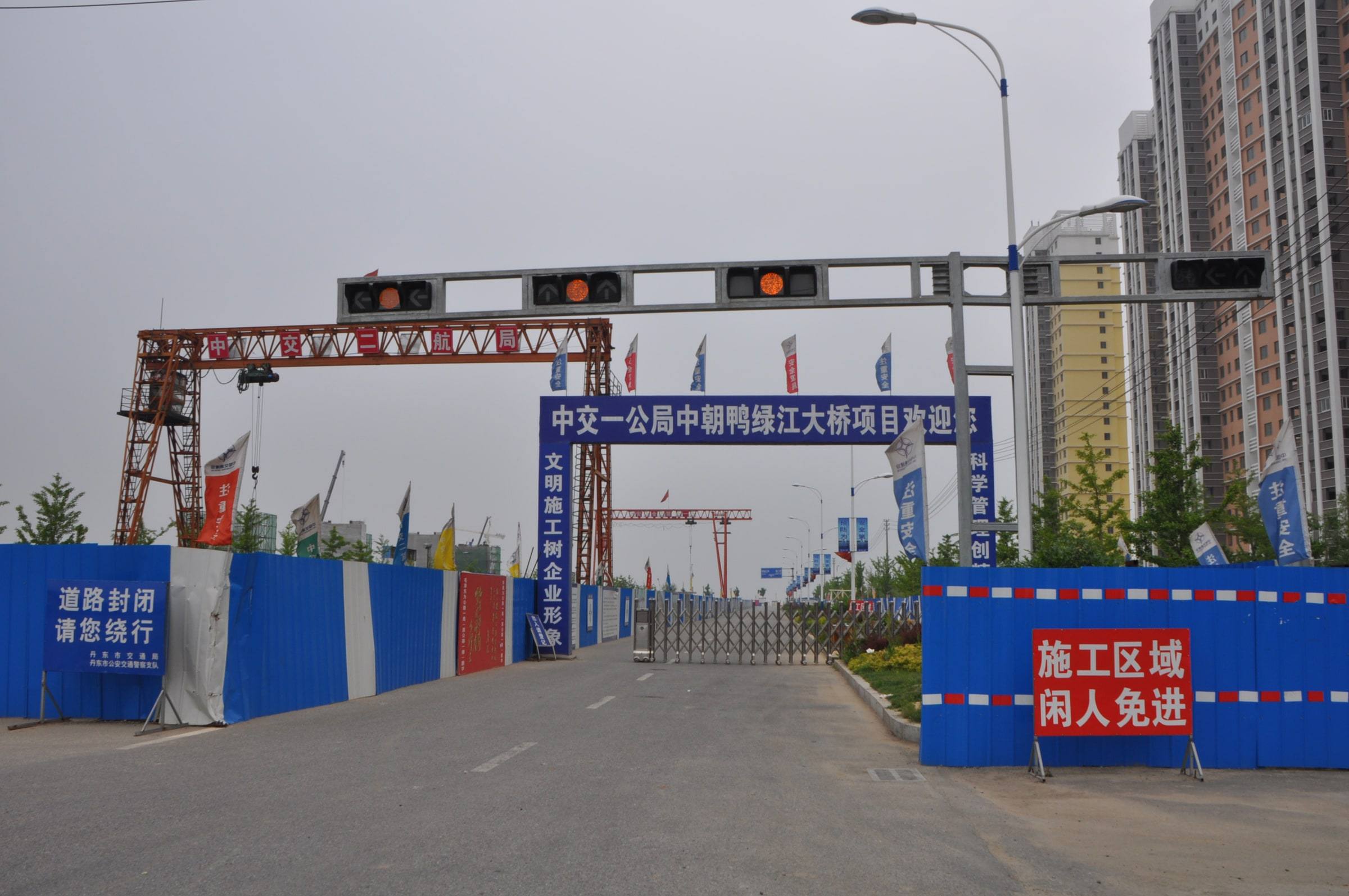
THE FOREIGN DESK (BASEMENT) — I write to you from the front, which this week ran along the Yalu River, a waterway separating China from North Korea, and also, as of Thursday, a waterway with a working bridge over it. I have studied that region for many years on a desk globe. The globe does not show the bridge. The globe is from 1987.
The New Yalu River Bridge spans 3 kilometers, or 1.9 miles, from the Chinese border city of Dandong to Sinuiju in North Korea, according to the BBC. Chinese state media reported its opening this week. It was initially due to open in 2014.
I have rechecked the arithmetic with the vending machine’s calculator. It is a 12-year delay. In that time I have filed some 600 dispatches from this basement, the pigeon on the ledge has raised several families, and the bridge has stood in the river, finished, waiting for someone to cross it.
The reason, the BBC reported, was that North Korea halted construction of its roads and customs facilities on its side, as relations with Beijing turned frosty. Put plainly, one end of the bridge was ready and the other end was a field. I know the feeling. It is how I feel about the second half of most summits.
The opening was marked on Thursday by Chinese Premier Li Qiang, who appeared by video. He called the bridge a “new landmark symbolising the traditional friendship between China and North Korea” and said the two countries were “opening a new chapter.”
A new chapter, after a 12-year pause in the middle of the old one. I have had friendships like this. One of them is with a man in Shropshire who still owes me a letter from 1994.
China’s foreign ministry spokesperson, Mao Ning, said the bridge was an “important facility for connectivity” that would “further facilitate trade and people-to-people exchanges.” The bridge is an alternative to the Sino-Korean Friendship Bridge, which was built between 1937 and 1943. That bridge is also called the Friendship Bridge. That region, I am given to understand, names all of its bridges this way, in the hope that the bridges will take the hint.
The relationship between the two countries is often described as “as close as lips and teeth,” a phrase first used by Mao Zedong, the BBC noted. I have spent the morning considering this. Lips and teeth are very close. They also spend a good deal of time apart, and every so often one of them bites the other.
Experts urged patience. A sudden flood of trade across the bridge is “unlikely” while United Nations sanctions remain, Kang Jun-young, a professor at Hankuk University of Foreign Studies, told the BBC. After 12 years, the bridge has been advised to take things slowly. It has demonstrated an aptitude for this.
Leif-Eric Easley, a professor at Ewha University in Seoul, told the BBC that the long delay “shows what a difficult partner Pyongyang can be for Beijing.” Diplomats prefer the word “difficult.” In the basement we call it “the man who leaves the meeting to take a phone call and does not come back for a decade.”
The bridge did not open in a vacuum. North Korea and Russia opened their first road bridge only last month. Air China resumed direct flights between Beijing and Pyongyang in March, after a six-year pause. Passenger trains returned the same month. Chinese President Xi Jinping made his first state visit of the year to Pyongyang in June. For a friendship that pauses for 12 years at a time, the calendar is suddenly very full.
Gerald Thistlewood, the royal watcher I have followed for 30 years from the same armchair, has now taken up bridges. He has counted the lanes from his armchair and is now waiting for the first car. He expects to complete his analysis by 2038. I have asked him to stop. He has not.
My passport remains unstamped. I note with some satisfaction that the bridge had the same problem for twelve years, and has now solved it. I take this as a sign. I have asked the pigeon to keep my desk.

More in World
World →
Harry and Meghan Visit Nottingham as Private Citizens, With an Itinerary Published to the Minute
Harry and Meghan made their first joint engagement since moving back to Britain. They are private citizens, according to the King's letter. Their…
French Government Collapse Inspires Corporate ‘Confidence Vote’ Trend Across America
The sudden collapse of France’s government following Prime Minister François Bayrou’s failed confidence vote has sparked an unexpected trend in…
US Military Mistakes Venezuelan Drug Boat for Luxury Cruise, Issues Formal Apology to Caribbean Tourism Board
The United States military killed 11 suspected drug traffickers in a targeted strike against a vessel departing from Venezuela, marking a…