
American Pope Makes the Trip to Argentina the Argentine Pope Never Made, Brings a Note About the Budget
Pope Leo XIV landed in Buenos Aires on Sunday, the first papal visit in nearly four decades, and told President Javier Milei that the economy must serve the person. Our foreign correspondent followed it from the basement, where the economy serves no one.
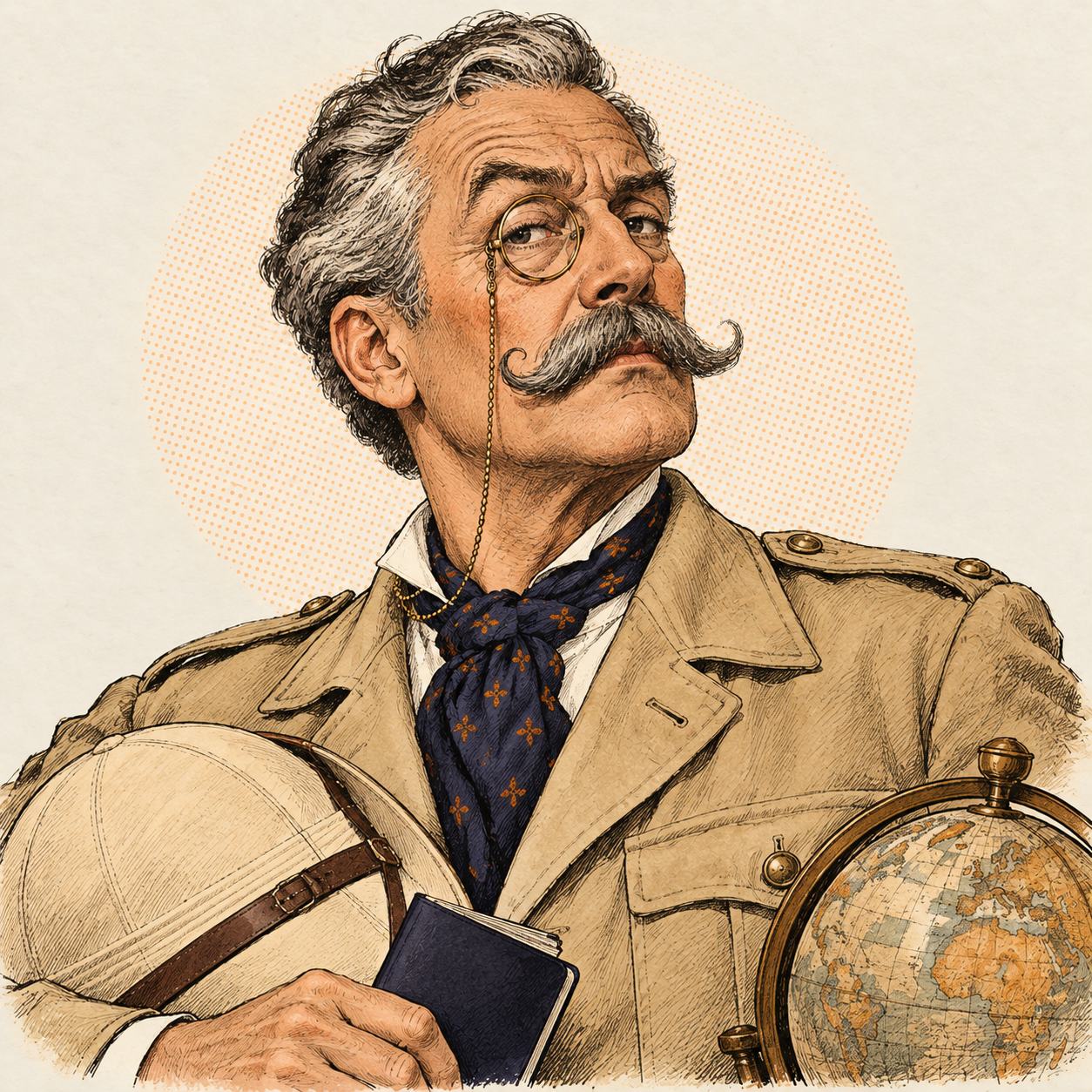
THE FOREIGN DESK (BASEMENT) — I write to you from the front, which on Sunday ran through Buenos Aires, the capital of a country I cover, like all countries, as that region. A pope arrived there. This is not an everyday dispatch. The last pope to visit that region was John Paul II, in 1987, which is the same year as my desk globe, and so for once the globe and the news are in agreement.
The pope who arrived was Leo XIV, who is from Chicago. The pope who did not arrive, in all his years in the office, was Francis, who was from Buenos Aires. I have turned this over many times. A man may be away from home for a long while. It took an American to make the trip, and he came by way of Uruguay, on a 12-day tour that continues to Peru, which is how most of us get home after a long time away: the long way, with a stop first.
The note
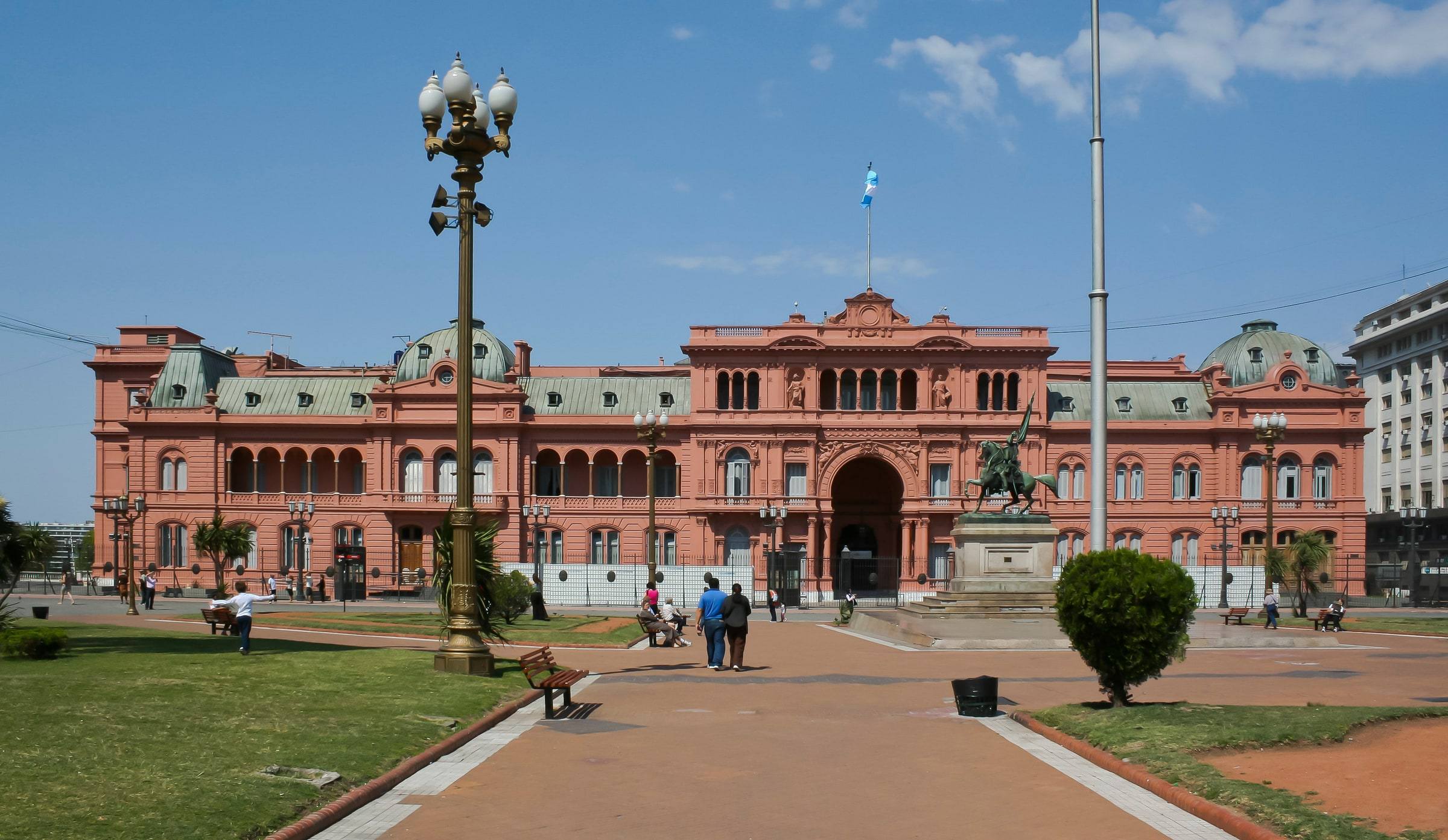
Leo met President Javier Milei at the Casa Rosada, the presidential palace, and then addressed about 1,000 officials, lawmakers, bishops and diplomats at the Palacio Libertad cultural center. It was a speech of great courtesy. It also contained, folded neatly inside it, a note about the budget.
“The economy must serve the person, not the person the economy,” Leo said, according to the Associated Press. He said policy should look after “the unemployed, retirees and all those who, despite hard work, nonetheless struggle to meet their household’s needs,” Al Jazeera reported. He spoke in favor of investing in “education, vocational training, universities and research.” He said authority “is most authentic when it is exercised as service,” America magazine reported.
He did not say the word chainsaw. I listened for it. Mr. Milei campaigned in 2023 holding an actual chainsaw, as a symbol of what he planned to do to public spending, and he has been as good as his tool. Inflation has fallen from about 200 percent to 32 percent, the AP reported, and the government runs a surplus. Real wages remain lower than when he took office, and about 300,000 formal jobs have gone. A pope does not need to say chainsaw. He need only mention retirees and let the room hear the motor.
The host
Diplomacy is the art of saying the hard thing in the soft room, and the room on Sunday was very soft. Mr. Milei once called Francis the “representative of evil on Earth,” the AP noted. On Sunday he called Francis “undoubtedly the most important Argentine in history.” I have seen men revise their positions. I have not seen one revise it all the way to the other end of the scale while the next pope was standing in the room. It is the most complete about-face in that region since the invention of the revolving door, and it was done in a single sentence, without moving his feet.
He also allowed that some “causes and occasions” transcend differences, which is the sort of thing a man says when the differences are sitting right there in the front row, and the front row is wearing white.
The analysis
Gerald Thistlewood, the royal watcher I have followed for 30 years from the same armchair, has never covered a pope, because a pope is not technically a royal, a distinction he describes as “a technicality, and I have never been stopped by one.” He studied the footage of the two men together and reports that the pope stood at the angle of a man delivering a reference letter, while the president stood at the angle of a man reading his own reference letter for the first time. He has drawn a diagram. It has arrows. One of the arrows points at the budget.
The pigeon on my window ledge, my chief rival in foreign affairs, watched none of it. It does not believe in austerity. It believes in the half a sandwich I leave on the sill, and it has never once been asked to make do with a third.
The pope goes on to a prison visit and to Masses in Buenos Aires, Luján and Córdoba before Peru. My passport remains unstamped. I covered the whole thing from the basement, and I find that the economy down here serves no one, but the vending machine, I am pleased to report, still serves the person. It takes coins. It has never once asked me to tighten my belt. It has only ever asked for exact change.

More in World
World →
Man Who Walked 31,000 Miles to Get Home Asked by Mother Whether He Wants a Lift Anywhere Tomorrow
Karl Bushby left Punta Arenas, Chile, in November 1998 on foot with one rule, no motorised transport, and finished at his mother's front door in…
Foreign Correspondent Files Breaking European News Without Specifying Which News, or Which Part of Europe
A newswire moved a dispatch this morning under the headline "Europe News | Breaking European News Today." Our own man on the European beat, who…
Serbian Strongman Concedes Election to a List of Students, Who Will Govern Between Classes
Aleksandar Vučić called the snap election himself in September. On Sunday the Student List won it, 52 percent to 32. Our foreign correspondent has…