
Justice Department Asks Supreme Court to Set Aside 20,000 California Ballots From a List Where 42 Percent of the Names Aren't on the Voter Rolls
Two courts have already said no, the election is Tuesday, and this reporter has run the government's list through a spreadsheet, which had questions.
WASHINGTON — The Justice Department asked the Supreme Court on Monday to order California to set aside the mail ballots of about 20,000 people on a federal list of suspected noncitizens until their citizenship can be checked. The request arrived one day before Election Day. This reporter’s chart of the calendar confirms it is the last day on which that is possible.
The emergency application was filed by Solicitor General D. John Sauer. The government’s argument is about mixing. Once the challenged ballots are counted and commingled with everyone else’s, it says, they can never be separated again, and the harm cannot be undone.
Two courts have already heard that argument and declined. U.S. District Judge David Carter in Los Angeles rejected the request last week, finding that it pushed federal authority into elections the Constitution leaves to the states. On Friday a divided panel of the Ninth Circuit agreed with him, 2 to 1.
“There is a material risk that granting the United States its requested relief would result in disenfranchisement,” wrote Judges Mark Bennett, a Trump appointee, and Gabriel Sanchez, a Biden appointee. Judge Patrick Bumatay, also a Trump appointee, dissented.
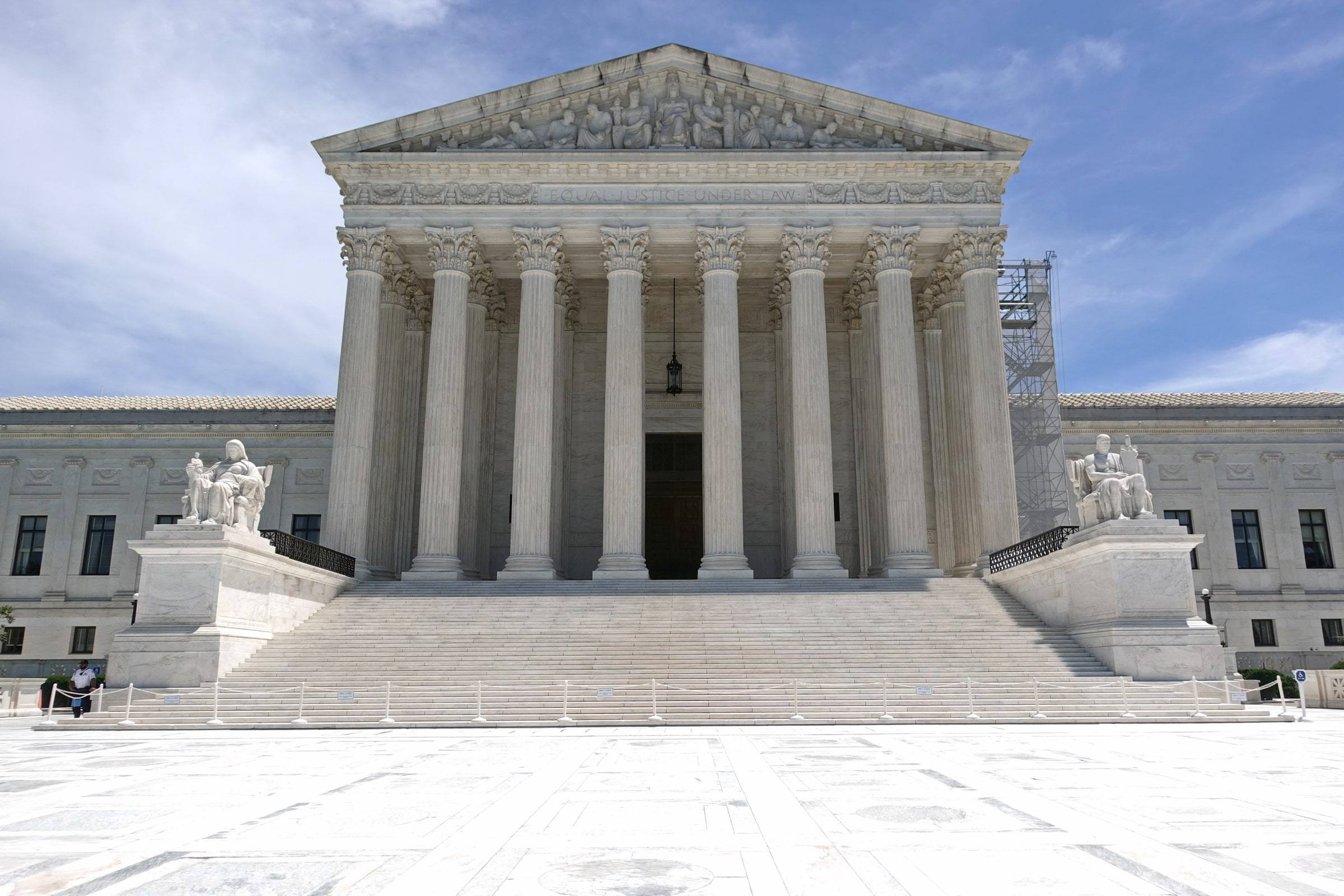
The application now goes to the Supreme Court, where emergency matters from California land first with Justice Elena Kagan. As of Monday, the Court had not acted on it, set a deadline for California to respond, or said whether it would take it up at all. No court has ordered any ballot set aside.
The spreadsheet
This reporter has a professional interest in lists. The lawsuit, filed Oct. 15, came after a dispute with California election officials over a flash drive the department said carried the names. The drive has since become the most consequential spreadsheet in the state, and so this bureau did what it does with every spreadsheet. It checked the rows.
It did not have to. The UCLA Voting Rights Project, working with the Coalition for Humane Immigrant Rights, already had. Their analysis counted 20,930 names on the government’s list. Of those, 8,880, or 42 percent, do not match anyone in California’s current voter file. At least 22 belong to people the groups confirmed are naturalized U.S. citizens.
In polling, a sample in which 42 percent of the respondents cannot be found is not a sample. It is a search party. This bureau’s model has correctly predicted zero elections, a record it calls “a strong baseline.” Even the model knows where its respondents live.
The government’s core point rests on a rule every spreadsheet user learns the hard way: once you paste two columns together, you cannot unpaste them. That is true. It is also why you check the rows before the paste, and not on the evening before the paste.
“A list is a hypothesis,” said Gary Plinth, who maintains this bureau’s backup copies of the backup spreadsheets. “You test it, and then you take it to the Supreme Court. You do not take it to the Supreme Court as the test.”
California says its safeguards against noncitizen voting are strong, and warns that the federal list may contain errors that could disenfranchise eligible voters. The Justice Department, which says it is enforcing the federal ban on noncitizen voting, calls setting the ballots aside a modest remedy.
What the chart shows
This reporter has charted the government’s timeline. A lawsuit in mid-October. A loss in district court on a Wednesday. A loss at the appeals court on a Friday. An emergency application on a Monday. The line goes steadily up and to the right and ends at a box labeled Tuesday.
What the model can state with full confidence is this. The list is 42 percent unmatched. Two courts have read the request and refused it. The Supreme Court has the paperwork and has not ruled. And California’s election runs Tuesday under the rules it already has, because as of this writing no court has changed them.
The model would like it noted that it does not have a forecast for the justices. It has a forecast for the spreadsheet, and the spreadsheet needs work.

More in Politics
Politics →
Judge Dismisses Justice Department's Harvard Admissions Suit After Government Skips the Part Where You Say 'Or Else'
A federal judge in Boston tossed the administration's bid to force Harvard to hand over years of admissions records, ruling the government went to…
Judge Tosses Case Against Ex-FBI Officials After Finding the Investigation Was Mostly a Deadline
A federal magistrate in Washington threw out the Justice Department's case against two former FBI officials accused of lying to Congress about the…
Judge Rejects Federal Plan to Lose the Alaska Senate Race in Advance
A federal judge dismissed the Justice Department's suit to block Alaska's Senate results if the Republican incumbent loses, finding no lawful way to…