
Amazon Unveils Flying Security Camera That Guards Your Home for Eight Minutes, Provided You Own No Mirrors
The $249.99 Ring Drone Cam maps every room in your house and patrols it on a schedule, and our tech reporter has already cleared a flight path through his kitchen, his bedroom and several other places he has not thought hard about.

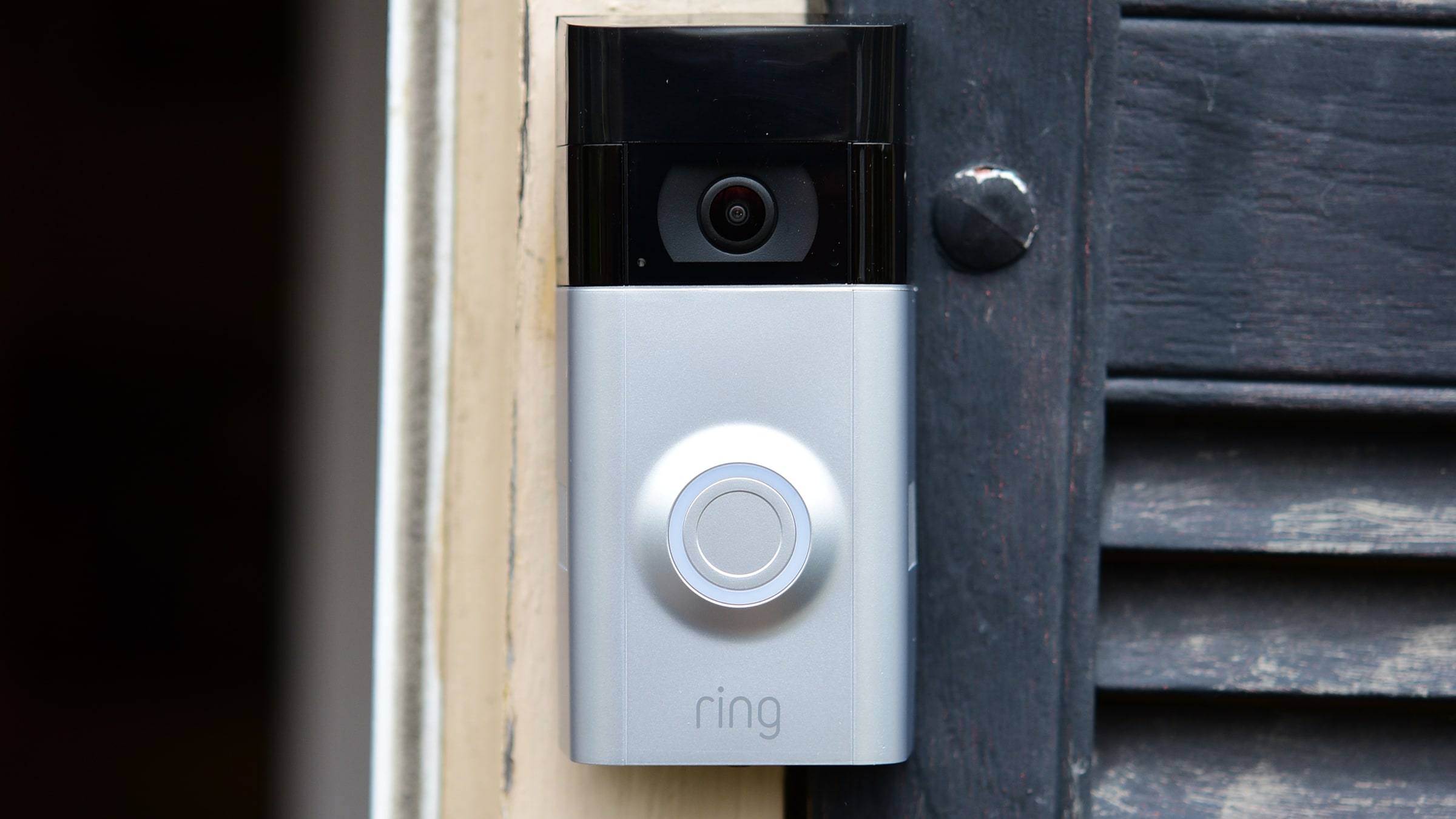
SOMEWHERE WITH GOOD WI-FI — For years, the home security camera has had one fatal flaw. It stayed where you put it. On Tuesday, Amazon fixed that, and I have not sat down since.
Amazon’s Ring unveiled Ring Robotics, a line of autonomous security devices led by the Ring Drone Cam, a flying indoor camera that patrols your home on its own. It costs $249.99 and ships Jan. 27, 2027, according to Amazon, once the Federal Communications Commission signs off. A wheeled robot for businesses, the Ring Rover Cam, costs $999.99 and ships Dec. 16. Amazon calls the drone an “autonomous way to check on your home that has never existed before.” This is the most game-changing thing to happen to a hallway since the hallway.
How it works
Setup is simple. You carry the drone through your home, room by room, and its AI Pilot system digitally maps your floor plan, Ars Technica reported. The system then identifies your rooms and suggests patrol points near side doors and windows. The drone flies those routes on a schedule for customers who subscribe to the Ring Protect plan, and it takes off on its own when a Ring camera, sensor or alarm sends a notification.
It shoots 2K video with a 148-degree field of view and rotates a full 360 degrees. Two LED lights come on in the dark. It is, in short, a revolution in knowing what is in your house.
The specs, which are disruptive
The Drone Cam flies for up to eight minutes “on a new, fully-charged battery under controlled conditions,” according to the product description. Then it returns to its dock. Eight minutes is a very innovative length of time. It is long enough to check the living room, the kitchen and, if the burglar is considerate, the den.
The product description also notes that performance may degrade around “polished marble or wet tile,” blank matte walls without features, and transparent surfaces such as frameless glass and mirrors. In fairness to the drone, a mirror is just another drone, flying directly at you, wearing your face.
The Rover Cam has its own list. It works on a single floor, because it cannot climb stairs, and Amazon says it is not compatible with “curved edges, sunken areas, flooring transitions greater than 1.375 inches,” or “black glossy floors.” It does have an adjustable mast to peer over counters, a siren, a light tower and two-way audio, so if an intruder ever stands perfectly still on beige carpet in a one-story building, he is going to hear about it.
A quick call
I hopped on a quick call with Trent Okafor-Lindh, a home security consultant who has never been wrong on a podcast, to get his take.
“Most break-ins happen on the ground floor, in under ten minutes, in rooms without mirrors,” Okafor-Lindh said. “I made that up just now, but it sounds like a product.”
I also asked my own startup, an app that reminds your other apps to drink water, whether it could integrate with the drone. It could not. The app has been unresponsive since it found out about the drone.
History, disrupted
Ring has tried this before. The Ring Always Home Cam was sold by invitation only as a “Day 1 Edition” in 2021, Ars Technica reported, at the same starting price. That was a beta. This is a launch. Those are completely different words.
Amazon says the new devices offer “privacy and security without compromise,” including LED indicators and on-screen notices when they are recording. Videos from both are protected by Ring’s newer encryption feature, which the Electronic Frontier Foundation has called an improvement that still falls well short of end-to-end encryption, Ars Technica reported. Rover videos are stored in the cloud for up to 180 days.
So I am in. I have cleared a flight path through my kitchen, my bedroom, my bathroom and my closet, and I have walked the drone through every one of them so that the AI Pilot knows exactly where everything I own is kept and which windows open.
At press time I was reading the rest of the Ars Technica story, which notes that in 2023 the Federal Trade Commission charged Ring with letting employees and contractors watch customers’ videos of their private spaces, and with security so weak that hackers got into 55,000 U.S. accounts. It also says Ring has brought back features that let police request footage from users. I have now carried a camera through every room of my home, by hand, in my socks, and uploaded the map.

More in Tech
Tech →
NASA Is Hiring Astronauts to Live on the Moon; Applicants Are Advised the Sea of Tranquility Has No Fish
Applications are open through Dec. 3 for the next astronaut class, which NASA says could live and work at a Moon Base. Our outdoors editor read the…

TwitchCon Expands Free Ticket Giveaway After Streamers Politely Decline Free Tickets
With the doors opening Thursday, the complimentary three-day pass has become the most disruptive product in live streaming, and the only one nobody…

CBS Sports Publishes AI Exact-Score Predictions for Every Week 9 Game, Shows You One
A CBS Sports article promising self-learning AI score predictions for every NFL game this weekend printed one exact score. Our tech reporter calls…