
Californians Reject Billionaire Tax After Billionaires Spend More Than $350 Million Explaining Why It Was Bad for Californians
Proposition 40's one-time 5 percent tax on fortunes over $1 billion failed nearly a week after Election Day. Opponents outspent supporters about 10 to 1, which this reporter, awake since 4 a.m., considers the best trade of the year.

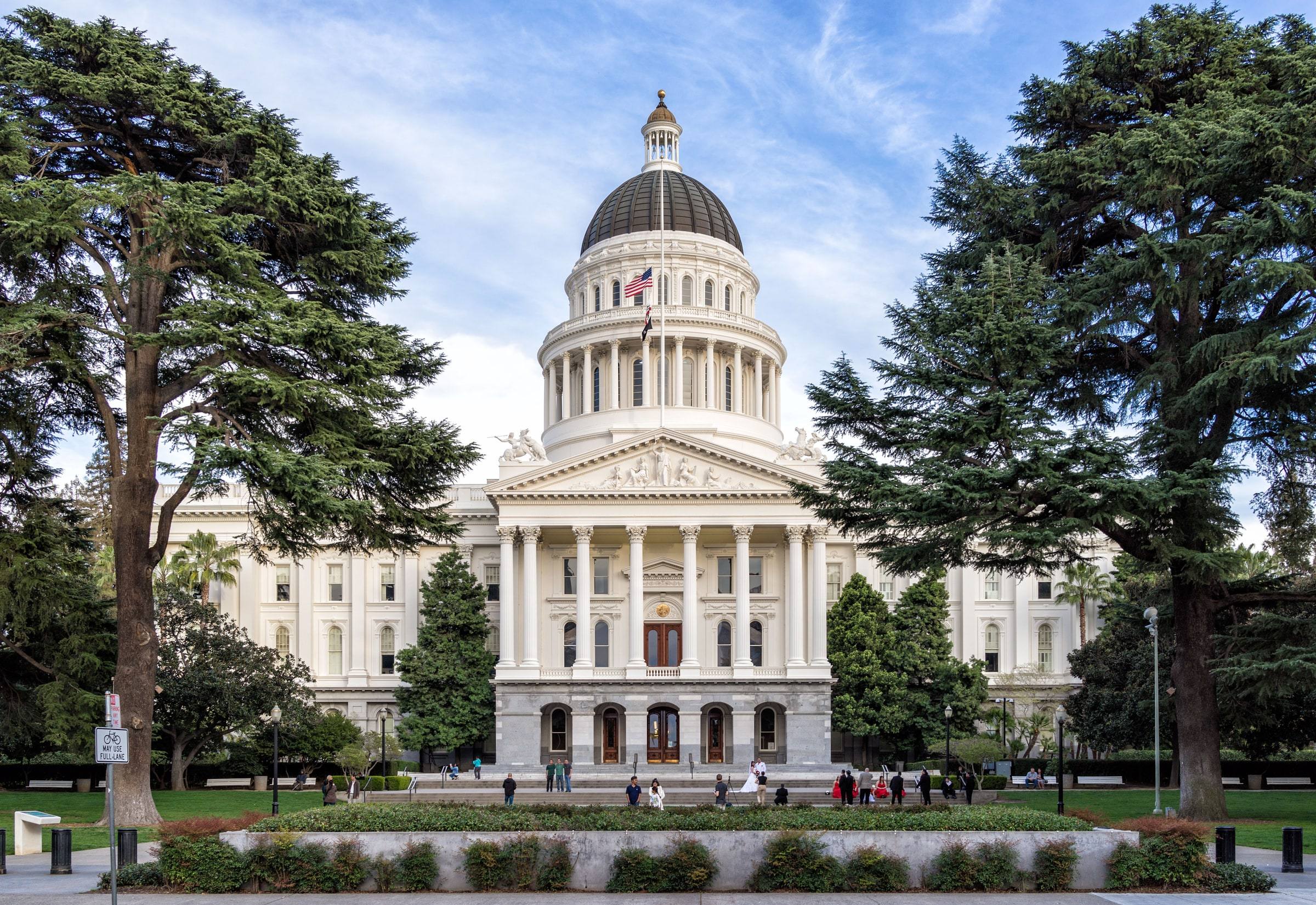
SACRAMENTO, CA — California voters have rejected Proposition 40, the ballot measure that would have charged the state’s billionaires a one-time tax of 5 percent on their net worth, The Associated Press determined Monday, nearly a week after Election Day. NBC News also projected Monday that it failed. The call came Monday evening. I had been up since 4 a.m. waiting for it, and my first thought was: whoever was on the other side of this trade deserves a podcast. I have one. It has two listeners. Both are me.
The no side led 52.8 percent to 47.2 percent when the AP called it, CalMatters reported. NBC News put it at nearly 53 percent to 47 percent with about 83 percent of the expected vote counted. California counts mail ballots that were postmarked by Election Day and arrive within a week, which is why it took this long, the AP noted.
What it would have done
The measure applied to Californians with a net worth above $1.1 billion, with a smaller, phased-in rate for those between $1 billion and $1.1 billion, NBC News reported. Most of the money was to backfill federal healthcare cuts, with 10 percent for education and food assistance, according to the AP. Its sponsor, the Service Employees International Union-United Healthcare Workers West, said it would raise about $100 billion. It would have been the first tax of its kind in the United States, the AP, NBC News and the BBC reported.
The nonpartisan Legislative Analyst’s Office warned that some wealthy residents could leave, and estimated the measure could eventually reduce state revenue by around $1 billion a year, NBC Los Angeles reported.
The trade
Here is the part I want every young investor to print out and tape above their bed.
Google co-founder Sergey Brin gave more than $100 million to fight the measure, the BBC, the AP and The San Francisco Standard reported. Building a Better California, the committee working to defeat it, raised more than $333 million, the AP reported. All told, ultra-wealthy opponents donated $378.4 million to stop the tax, according to CalMatters. The yes campaign raised $33.5 million.
The sponsors said the tax would raise $100 billion. Stopping it cost less than $400 million. That is under half a cent on the dollar. I have never in my life bought anything at half a cent on the dollar that went up, and believe me, I have looked. My crypto portfolio is down 98 percent, which I consider basically up, but even I know a better-than-250-to-1 return when I see one.
Speaking of 250 to 1: that was how much opponents were outspending supporters on ads in late October, according to the ad-tracking firm AdImpact, NBC News reported. In a normal market that is called a blowout. In a California election it is called getting your message out.
The opponents also put two more measures on the ballot, Propositions 41 and 42, designed to nullify Proposition 40 even if it passed, the BBC and NBC News reported. Proposition 42 would ban new taxes on assets. It was leading 51.6 percent to 48.4 percent Monday evening, CalMatters reported, and has not been called. That is not a hedge. That is a hedge with its own hedge, and frankly I have never been more inspired.
The coalition
The measure split Democrats. Gov. Gavin Newsom opposed it, as did Gov.-elect Xavier Becerra, along with Planned Parenthood, the California Teachers Association and the California Medical Association, according to NBC News and CalMatters. Sen. Bernie Sanders and Rep. Ro Khanna campaigned for it, and the California Democratic Party backed it.
Newsom told reporters last month that Sanders’s focus on wealth inequality was “spot-on,” the AP reported. But he said that “on this issue, we fundamentally disagree.”
“Proposition 40 was a reckless experiment conducted on our state’s economy with little regard for the harms it would cause,” the No on Prop. 40 campaign said in a statement, according to CalMatters and the AP.
SEIU-UHW president Dave Regan said the union would try again in 2028 if the Legislature does not find another way to fund healthcare. “That’s not a hypothetical. That’s our plan,” Regan said, CalMatters reported. He blamed the loss on the spending gap: “That is incredibly corrosive and corrupting to our democracy and our political system,” he said.
My position
California still has a hole in its healthcare budget, and federal cuts are expected to push about 2 million residents off health insurance, according to CalMatters. Somebody will have to pay for that. Based on this campaign, it will not be anybody who can afford a $100 million check to a political committee.
Some analysts call that a problem. I call it a market signal. The people with the most money just showed the rest of us exactly what money is for, and they did it at a price every wage earner in California could only dream of paying on anything, including rent.
My alarm is set for 4 a.m. Tuesday. When the bell rings I will be long political committees, long countermeasures to the countermeasures and long the 2028 ballot, which by my math is already a buy.

More in Business
Business →
Three House Committees Want Jensen Huang Behind Closed Doors, and This Reporter Is Long Doors
Lawmakers want answers about Megaspeed, Trump says he was "amazed" and the stock fell 4.27 percent. This reporter has been buying closed doors since…
Nvidia Board Opens Independent Investigation Into Jensen Huang, Asks the Leather Jacket to Recuse Itself
Huang told staff he had an affair, and the board launched an inquiry after US officials alleged the woman involved has ties to Chinese intelligence…
Tesla Winds Down the Cybertruck After Selling 8 Percent of What Musk Promised, Some to Musk's Other Company
Elon Musk says Cybertruck production in Texas will wind down by mid-2027 to make room for the Cybercab. SpaceX bought $131 million of the trucks…