
Roy Cooper Wins North Carolina Senate Seat, Now Has to Go to the Senate
The former two-term governor flipped an open Republican seat Tuesday night and will now trade a job where things happen for a chamber where things get scheduled.

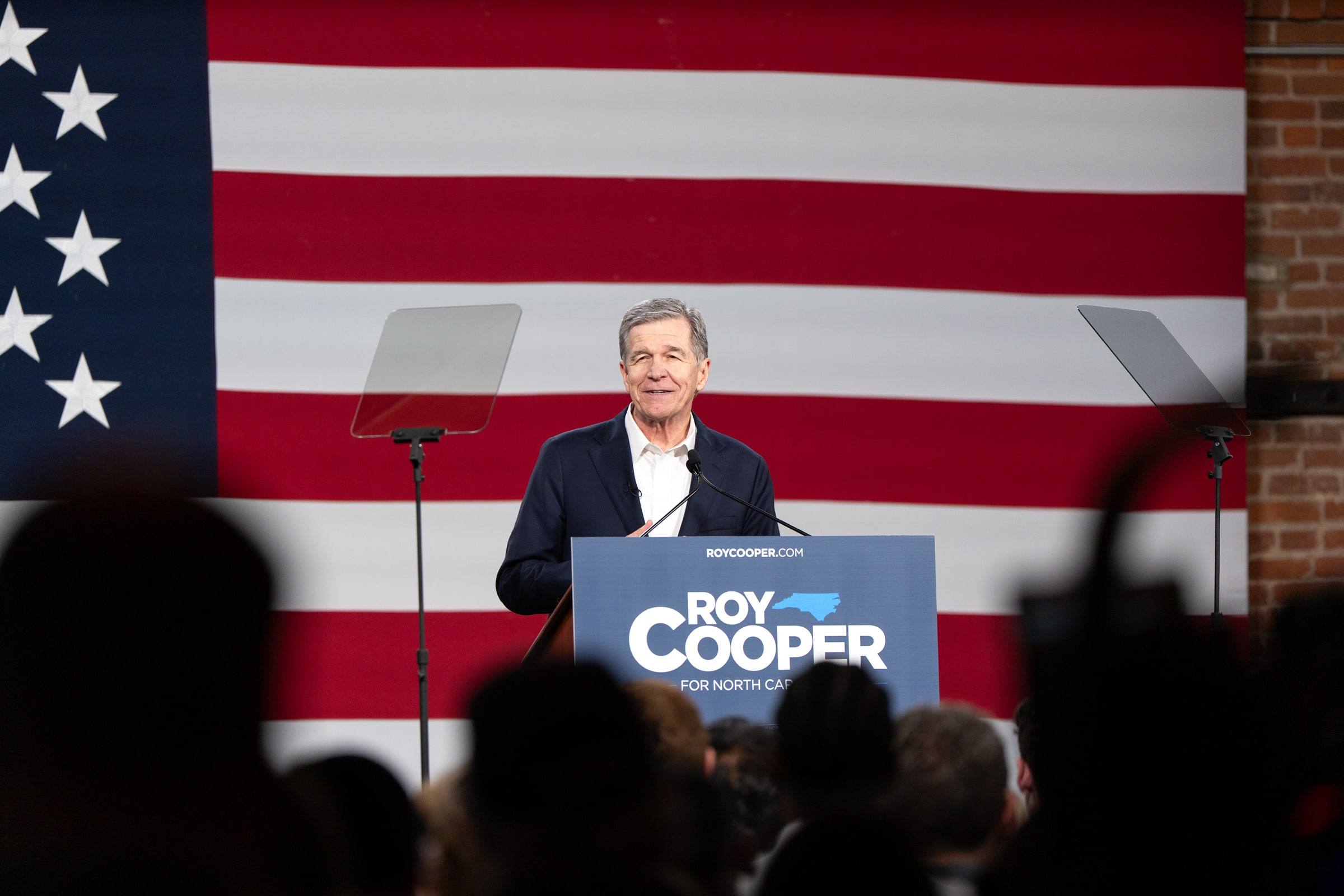
RALEIGH, N.C. — Democrat Roy Cooper won North Carolina’s open U.S. Senate seat on Tuesday, defeating Republican Michael Whatley. Networks called the race not long after the polls closed. Cooper must now go to the Senate.
Cooper, 69, served two terms as governor. Before that he was the longest-serving attorney general in the state’s history. For eight years he signed bills, vetoed bills and was sometimes overridden. He ran a state. Things in it happened on purpose.
That experience now goes into storage. Cooper is moving to a body of 100 people that votes on whether to hold votes. A governor makes decisions. A senator issues a statement about a decision, then a second statement about the first one.
The seat belonged to Sen. Thom Tillis, a two-term Republican who chose not to run again. He leaves the chamber the way most members hope to. On his own terms, and walking away from it.
Whatley, 57, is a former chairman of the Republican National Committee. He entered the race with President Trump’s encouragement. He had helped run a great many campaigns before. This was the first one he had run in.
Help was promised. The Senate Leadership Fund, the main Republican super PAC for Senate races, pledged $71 million to the effort. It then sent most of that money to other states. In Washington this is called a strategic reallocation. Everywhere else it is called leaving the potluck before the casserole comes out.
By early October, Cooper’s campaign reported $12.5 million on hand. Whatley’s reported $916,000. Both figures will be studied by consultants for years, mostly by the ones who were paid out of the first one.
Cooper ran on a four-word promise to “make stuff cost less.” It is a good slogan. It polls well with everyone who has bought anything. Starting in January, he will try to deliver it from a chamber that mostly holds hearings at which the cost of stuff is mentioned.
“Every governor who comes to the Senate has the same first week,” said Deep Throat Lozenge, this bureau’s most trusted source. “He looks for the room where things get done. Somebody walks him to the cloakroom. It is closed for a hearing about the cloakroom.”
Whatley told supporters in Gastonia that he had called Cooper to concede. This reporter records that without irony. A candidate lost, called the winner and said so out loud. In the week this bureau has had, that counts as a civic event.
Cooper is the first Democrat to win a Senate seat in North Carolina since 2008. Democrats need to flip four seats nationwide to retake the chamber. Both parties will spend the night explaining what the result means. This reporter has covered eleven administrations. It usually means a senator.
The results become official later this month. As of this writing, nobody has gone to court to object to them in advance.
North Carolina took a man who spent eight years running something and sent him to the one building in Washington designed to prevent that. The voters did their part Tuesday. The Senate has six years to do its part, and a long record of waiting for the seventh.

More in Politics
Politics →
Judge Dismisses Justice Department's Harvard Admissions Suit After Government Skips the Part Where You Say 'Or Else'
A federal judge in Boston tossed the administration's bid to force Harvard to hand over years of admissions records, ruling the government went to…
Justice Department Asks Supreme Court to Set Aside 20,000 California Ballots From a List Where 42 Percent of the Names Aren't on the Voter Rolls
Two courts have already said no, the election is Tuesday, and this reporter has run the government's list through a spreadsheet, which had questions.
Judge Tosses Case Against Ex-FBI Officials After Finding the Investigation Was Mostly a Deadline
A federal magistrate in Washington threw out the Justice Department's case against two former FBI officials accused of lying to Congress about the…