
Fastest Ocean Liner Ever Built Keeps Hundreds of Boaters Waiting All Afternoon to Watch It Sink
The SS United States, which still holds the transatlantic speed record, was due to start sinking off Destin at 1 p.m. Wednesday to become the world's largest artificial reef, and our outdoors editor has never been prouder of a boat for taking its time.

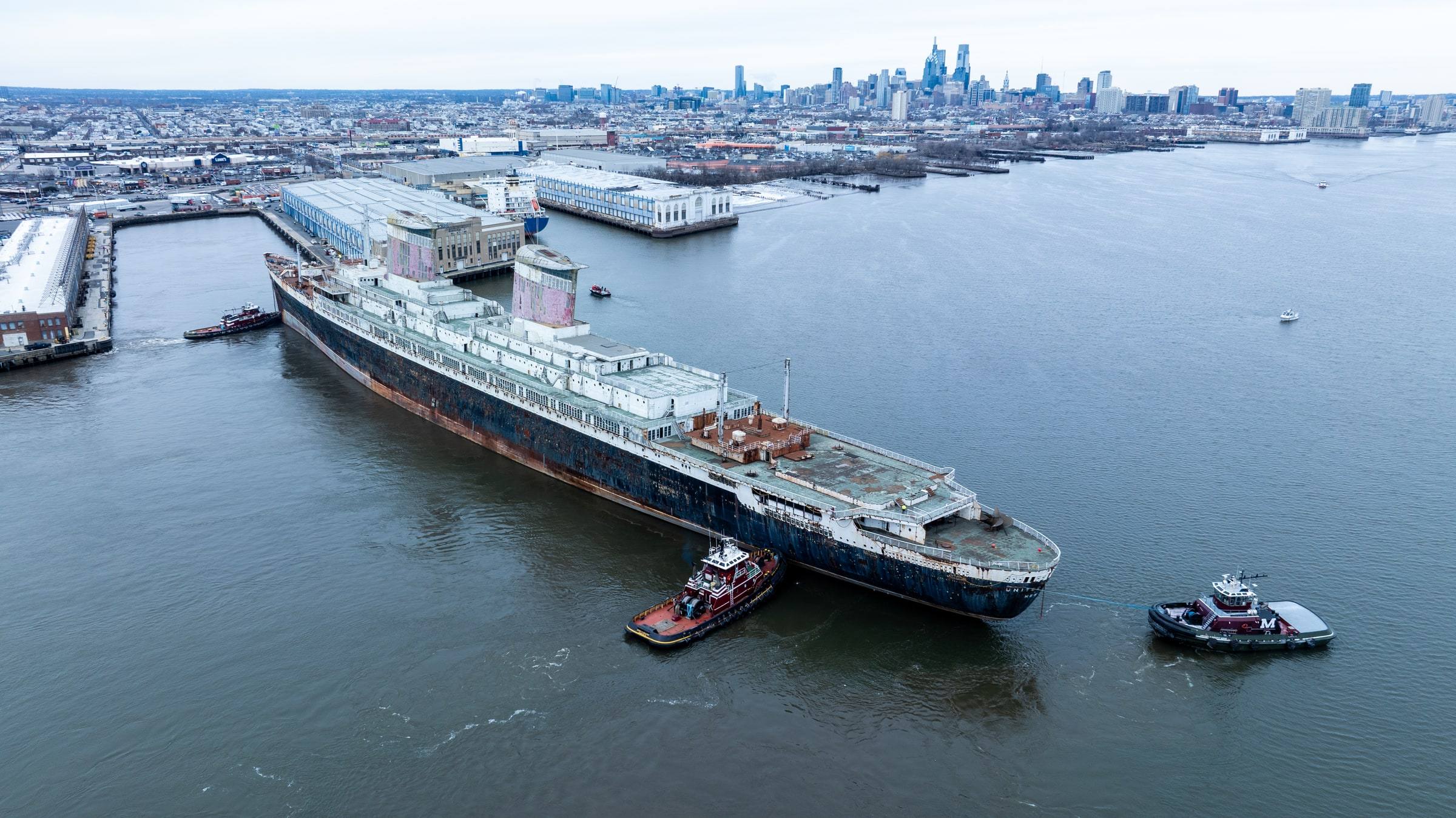
SOMEWHERE ON THE LAKE — The fastest ocean liner ever to cross the Atlantic spent Wednesday afternoon doing what every good fisherman learns to do eventually. She sat there and made everybody wait.
The SS United States was scheduled to begin sinking at 1 p.m. Central about 22 nautical miles southwest of Destin, Fla., to become the world’s largest artificial reef, the Pensacola News Journal reported. Okaloosa County, which bought her in 2024, had planned the job for Thursday and moved it up a day because of a forecast of heavy winds. The send-off ceremony was canceled. Then 1 p.m. became 2 p.m., and 2 p.m. became “any moment now,” and by late afternoon, the paper reported, crews were still filling sections of the ship with water and officials said the final descent had not begun.
Hundreds of boaters had motored out more than 20 miles into the Gulf to watch, the paper reported, kept about a mile back. This reporter knows that crowd. He has been in it. It is a man in a boat, a long way from shore, staring at one spot in the water, absolutely certain something is about to happen. That is not a delay. That is fishing.
The plan is to let the Gulf in slow, through valves on the ship’s original seawater intake pipes, so she goes down level. Once she starts, the county says, it should take about 45 minutes. “The biggest thing with sinking a ship is not how much water you put in,” Coleen O’Malley of Coleen Marine, the company doing the job, told NPR. “It’s making sure the air comes out.” Any man who has ever tried to sink a cooler to keep the beer cold knows exactly what she means, and knows it never goes down on the first try either.
The boat
She is 990 feet long, more than 100 feet longer than the Titanic. On her maiden voyage in 1952 she crossed the Atlantic faster than any passenger liner before or since, and the record still stands. She could do 38 knots forward, according to the SS United States Conservancy, and 20 knots in reverse. This reporter’s bass boat does about 20 knots forward, downhill, with the wind behind it and nobody in the front seat.
Four presidents rode her: Truman, Eisenhower, Kennedy and Clinton, CNN reported. Marilyn Monroe, Judy Garland and the Duke and Duchess of Windsor had staterooms. Then jets came along. She was retired in 1969 and spent most of the time since tied up somewhere, the last 30 years or so at a pier in Philadelphia, while one owner after another tried to figure out what to do with her.
The conservancy wanted a hotel or a museum. “We came so close,” Susan Gibbs, the designer’s granddaughter, told NPR. “But ultimately, it proved legally, financially, politically, just too daunting.” A late lawsuit to stop the sinking was turned down by a federal judge on Nov. 6.
So the richest country on earth could not find the money to keep its fastest ship afloat, and a county in the Florida Panhandle found the money to put her on the bottom. That is not how this reporter would have drawn it up. But it is how most good fishing holes get made. Somebody gives up on something big and heavy, and the fish move in.
The neighborhood
She is meant to settle upright in about 180 feet of water, with her top decks 55 to 60 feet from the surface, close enough for divers with an open-water card, CNN reported. She will become the 21st and biggest wreck on the Florida Panhandle Shipwreck Trail, nearly 80 feet longer than the old aircraft carrier Oriskany off Pensacola.
The new tenants are already on the way. “Fishes will start congregating around a new artificial reef within hours or days,” Michael Parsons, a marine science professor at Florida Gulf Coast University, told CNN. The other wrecks on the trail draw snapper, grouper, amberjack and barracuda.
Think about that. A ship that once carried movie stars across the ocean in under three and a half days will now house a red snapper who has never been farther than the end of the Destin jetty. The first-class cabins go to the grouper. Steerage goes to the urchins. Somewhere in the old ballroom an amberjack is going to look around, see all that room and decide to get bigger, which is exactly what happened to Big Doris.
The plan
This reporter has a plan. He will drive to Destin in the spring. He will hire a charter. He will drop a line over the spot where the fastest liner ever to cross the Atlantic is resting. And he will finally, for once in his life, be fishing over something that has moved quicker than the fish.
The raccoon under his dock, who leads their annual series 11 to nothing, will not be invited. Neither will his knee, which has predicted rain every day this week and has been right twice, the same as the weatherman.
Fair winds, old girl. You were built for speed, and on your last afternoon on top of the water you took it slow. Now you get to sit still and let the fish come to you. Take all the time you need. This reporter will be out there in the spring, and he is in no hurry either.

More in Culture
Culture →
Warner Bros. Revives 'You've Got Mail,' a Story About a Big Company Swallowing a Small One, a Month After Being Swallowed
The studio is developing a new take on the 1998 romantic comedy about a bookstore chain putting a little shop out of business, five weeks after a…

Broadway Announces 2026 Season Consisting Entirely of Things You Have Already Seen, Reassuringly
Producers unveil a slate of revivals, remounts, and returns, promising theatergoers the comfort of knowing exactly how everything ends, including…

A Movie About an Actor Made of Clay Is No. 1 in America, and Our Critic Has Questions
Clayface made $10.4 million on its first Friday. Our culture critic, who has never liked anything, would like to know why an actor who can become…