
Forest Service Quietly Posts Its Bigfoot Files, and for Five Weeks Nobody Could Confirm a Sighting
The agency put three decades-old Bigfoot records in its public reading room on Oct. 15. They went largely unnoticed until last week. One of them is its own biologist explaining why the tracks were probably not Bigfoot.

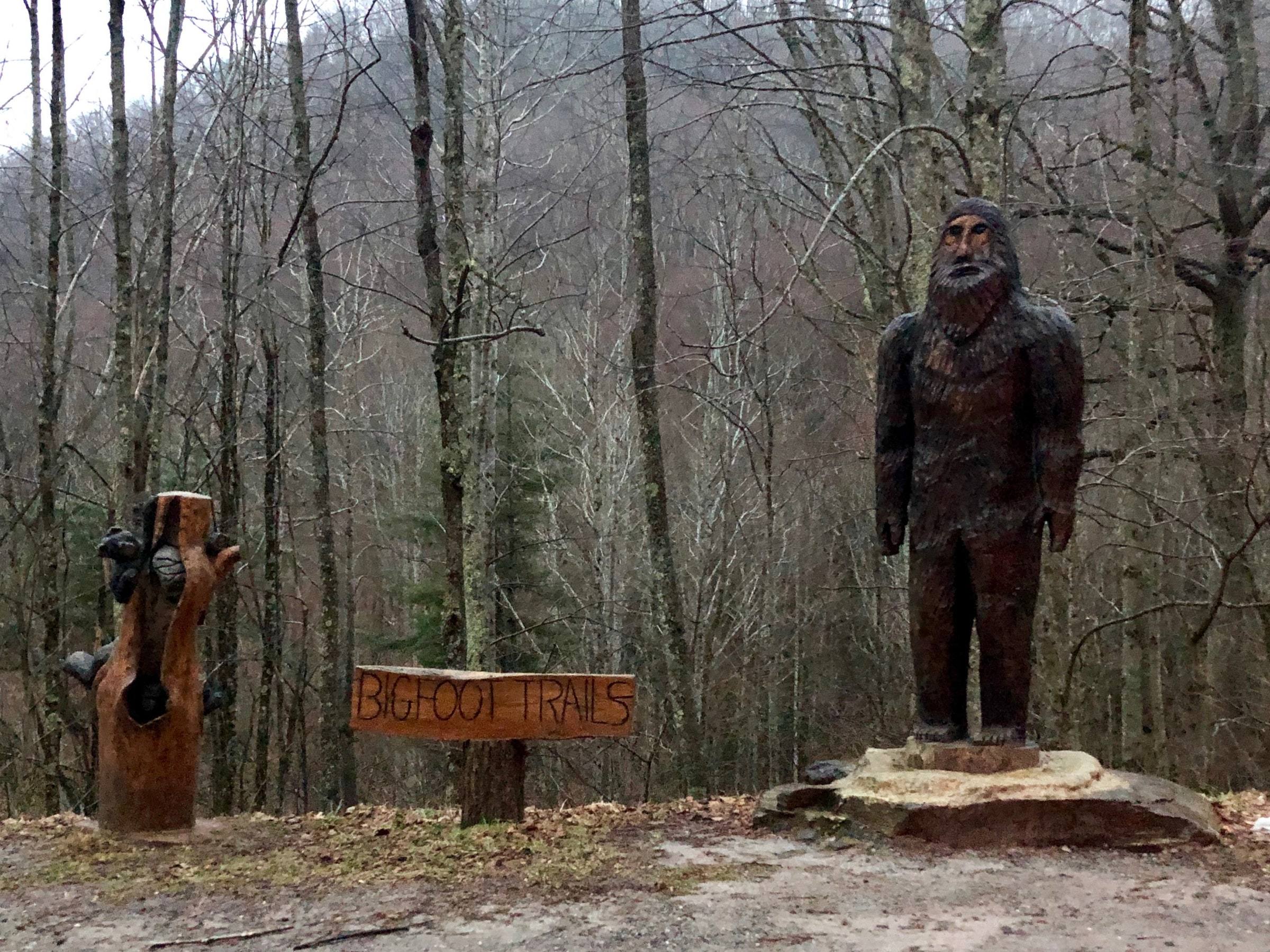
WASHINGTON — The federal government has released its Bigfoot files. It did so on Oct. 15, and it took the public about five weeks to spot them.
The U.S. Forest Service posted three historical records in its Freedom of Information Act reading room under the heading “Bigfoot/Sasquatch Records,” Newsmax reported, citing The Washington Post. The Post reported the release last week. Other outlets followed over the weekend.
The agency has not taken a position on whether Bigfoot exists. A Forest Service spokesperson said the agency weighs public interest when deciding which historical records to release, and did not say whether more Bigfoot documents are coming, according to the report.
The files cover Montana, Oregon and Washington. They range from the 1940s to 2003.
The tracks
The most official of the three is a 1982 Forest Service report from the Umatilla National Forest, which straddles the Oregon-Washington line.
A Forest Service patrolman reported seeing a large, unidentified creature and later found unusual footprints, Newsmax reported. A wildlife biologist and a U.S. Border Patrol tracker were sent to investigate.
The biologist photographed the tracks and made plaster casts at two sites in the Mill Creek Watershed, Outside reported. He skipped a third site, citing the terrain.
He then wrote his conclusion. “It is my opinion that the tracks observed at Site ‘A’ and Site ‘B’ along Low Creek were made by something other than a 300-pound-plus two-footed being,” he wrote, according to Outside.
His reasons were specific. The stride stayed a steady four feet whether the trail went uphill or down. A real walker’s stride changes with the slope. The tracks had a clear beginning and a clear end. In places, pine needles appeared to have been brushed aside before the print was made.
“If the tracks were faked, someone went to a great deal of trouble and detail,” he wrote.
A Washington State University anthropology professor, Grover Krantz, later disputed the finding, Newsmax reported. He argued the prints held details that would be hard to fake. The file does not settle the matter. The matter has not been settled since.
The elk
The second file is a six-page account, written in 1980, of a hunting trip in the 1940s near Petty Creek, west of Missoula, Mont.
Four hunters went to pack out an elk they had shot. They found only the entrails, and a set of large tracks leading away in the snow, Outside reported. The tracks came in pairs, as if whatever made them walked on two legs. “Whatever it was had picked up the elk whole and clear off the ground,” the account says.
The men followed the trail about half a mile. Then they stopped. “At this point we held a conference and decided that we were not particularly anxious to catch up to whatever it was,” the hunter wrote.
The conference remains the most decisive action in the federal Bigfoot record.
The sawmill
The third file is a 2003 newspaper clipping from Plains, Mont. It describes hundreds of large, human-like footprints in fresh snow outside a sawmill shop, Outside reported. A neighbor measured the prints at 16.5 inches long.
He told the paper he believed the visitor had walked up to the shop and turned back when a motion-sensor light came on.
What it means
The release comes as the Trump administration pursues more openness about unidentified flying objects, Newsmax reported. Most scientists remain skeptical that Bigfoot exists, citing the lack of credible physical evidence.
The Forest Service also held a public presentation near Yosemite recently, called “Bigfoot in Your Backyard,” about sightings around the Stanislaus National Forest. A Forest Service employee summed up the agency’s position. “While the forest cannot confirm or deny the existence of Bigfoot, we recognize his cultural impact, his place in tribal lore and his significance on the Stanislaus,” the employee said, Newsmax reported.
The files were public for five weeks before most of the country noticed them. They sat in a reading room, in plain sight, waiting for someone to come along.
Nobody came. Then someone did, and now everybody is looking.
Bigfoot, by most accounts, has been operating the same way for decades.

More in Politics
Politics →
Florida Man Confirmed as Northern Maine's Congressman, Says He Has Never Been in Florida a Whole Year
A ranked-choice count made it official: Paul LePage, a self-described snowbird who does not like snow, will represent the snowiest district east of…

Trump Has Another Moment With a Moving Walkway, This Time It Was a Hug
The president embraced China's leader on his way out of a meeting that produced warmth, cameras, and not much else. Washington has learned to read…

JD Vance, Genuinely Undecided About 2028, Pencils In Late Spring to Announce What He Decided
The vice president won't decide on a run until after the new year and may not say so until late spring, Axios reports. Our elections reporter has…