
Trump, Putin and Xi Schedule Historic First Summit, Announce Its Outcome a Week Early
The White House has announced the first-ever meeting of the American, Russian and Chinese leaders, and a senior official has announced that it will not produce an agreement. Our foreign correspondent, who covers that region from the basement, admires the efficiency.

THE FOREIGN DESK (BASEMENT) — The leaders of the United States, Russia and China will meet together next week for the first time, the White House said on Friday, and in a development this correspondent has not seen in many years on the world desk, the outcome was announced along with the meeting.
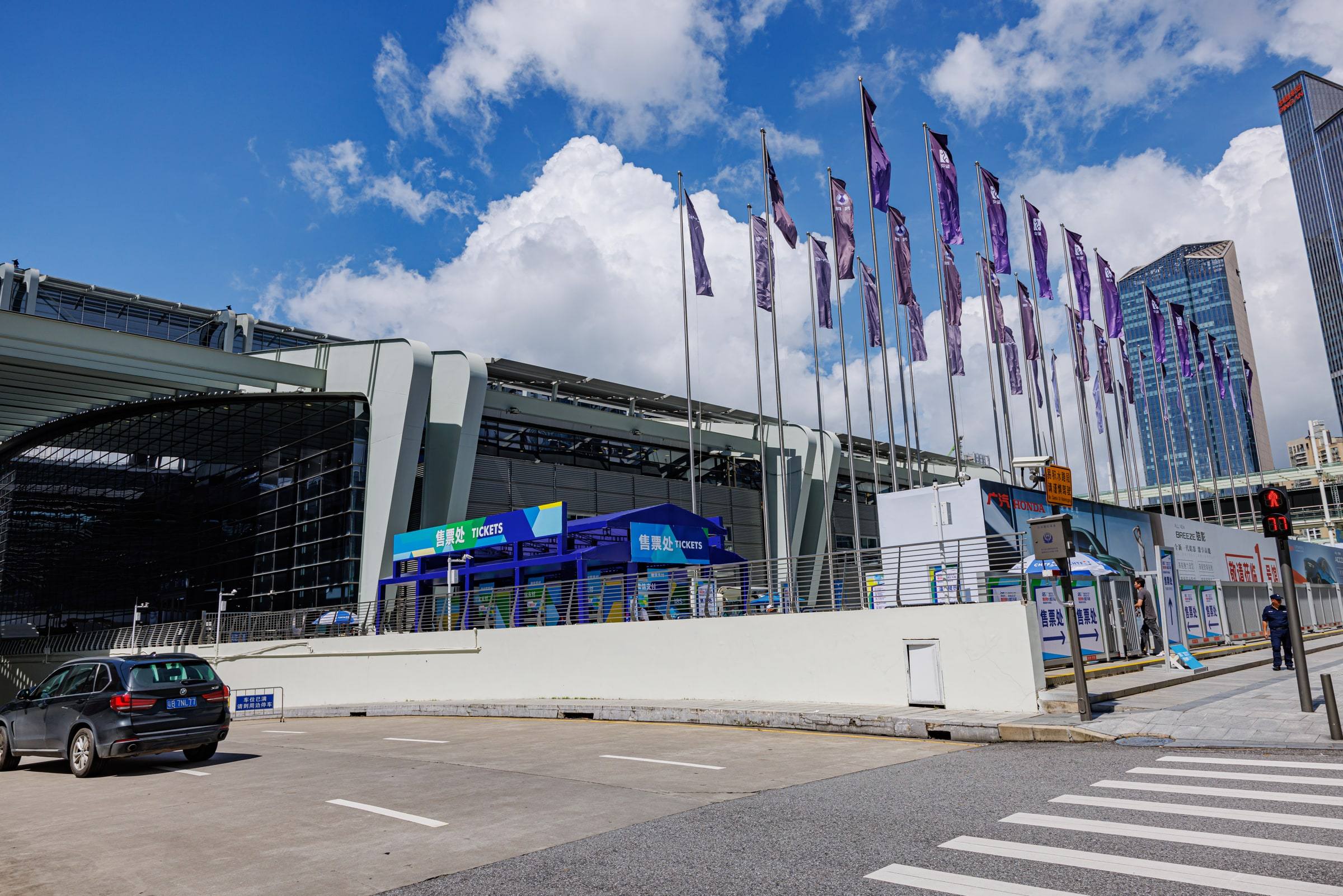
The three-way talks will take place on the sidelines of the Asia-Pacific Economic Cooperation summit in Shenzhen, White House spokeswoman Olivia Wales told reporters, according to the BBC. The Kremlin has confirmed the meeting and says it will be held on Thursday, Nov. 19, CNN reported.
“The President has made it clear that, among other topics, he will discuss the reduction of nuclear weapons in the world,” Wales said, according to CNN.
Then a senior US official, briefing reporters, gave away the ending. “We do not expect to get to any kind of agreement,” the official said, according to CNN, describing the meeting as “the entry point, the first conversation.”
A summit with the minutes already typed
Summits in that region and every other usually work the other way around. The leaders meet, the cameras flash, a communique is drafted at three in the morning, and only then does a spokesman step out to say that the talks were frank, that progress was made, and that nothing was agreed. It can take days. Next week’s trilateral has skipped straight to the last line.
This correspondent finds it bracing. The basement holds a staff meeting every Thursday at ten. Its printed agenda has read “No decisions expected” since the autumn of 2009, and attendance has never been better. A meeting that promises nothing cannot disappoint anyone. It can only overperform.
The same trip, Wales said, will “secure historic wins to the American people,” the BBC reported. A historic win and no agreement in the same week is a difficult double to pull off. This desk will be watching for how it is scored.
The host has not RSVP’d
There is one more guest to account for. Russia has confirmed. China, where the meeting will be held, had not reacted to the trilateral as of Friday, the BBC reported. Chinese state media reported only that Xi Jinping would hold “bilateral” talks on the sidelines of the summit.
So the first meeting of the three leaders has been confirmed by two of them, and the one who has not confirmed is the one whose city it is in. In that region, as in any household, it is unusual to learn of a dinner at one’s own house from the guests. It happens. One sets out an extra chair and says nothing.
This correspondent attempted the seating himself. A bilateral is a table with two sides. A trilateral is a triangle, and a triangle has no head of the table, which is presumably the point. Three chairs were borrowed from the supply closet and arranged by the photocopier. The third chair wobbles. No conclusions should be drawn from this.
The first conversation
The official’s phrase, “the first conversation,” is accurate only in the formal sense. Xi has met Putin dozens of times since 2013, CNN reported, Trump and Putin have met in person seven times, and Thursday’s bilateral will be Trump’s fourth meeting with Xi since he returned to office, according to the BBC. Between them they have had a great many conversations. This will be the first one where all three can hear each other.
Elon Musk will travel with Trump to China, according to CNN and Al Jazeera, but is not expected to attend the meeting. He is the rare traveller who crosses the Pacific in order not to be in a particular room. This correspondent has spent his career on the opposite discipline: being present, in spirit, at every room in that region without ever crossing anything wider than the stairwell landing.
The part that is not a joke
The subject on the table deserves to be reported straight. The last nuclear arms treaty between Washington and Moscow, New START, lapsed in February, leaving the two largest arsenals in the world without caps for the first time in more than 50 years, Al Jazeera reported. Trump has called for a “new, improved and modernised” deal that includes China, which has been building up its own arsenal. A first conversation about that is not nothing, even if nobody expects it to end in a signature.
This correspondent requested the travel budget to cover Thursday in person. The request was returned within the hour.
“This institution does not send correspondents to meetings that have already told us how they end,” said Peg Delacroix-Hume, editor-in-chief. “He may cover it from his desk, as he covers everything else.”
He will. The chairs are still out by the photocopier, and the agenda for Thursday is already written: no agreement expected. On that point, at least, every party to the story is in agreement.

More in World
World →
Kim Jong Un Scraps North Korea's Soviet-Era Flag, and Our Man on the Ground Was Nearly 14 Hours Early to the Story
North Korea retired its Soviet-era flag by decree. Our world correspondent covered the redesign from the furthest-flung outpost of this newspaper —…
Spanish Prime Minister Urges Workers to Strike Over Housing Crisis, Which He Is in Charge Of
Spain's first general strike in 14 years had the unions calling it massive, business calling it low and the government cheering it on, so our…
American Pope Makes the Trip to Argentina the Argentine Pope Never Made, Brings a Note About the Budget
Pope Leo XIV landed in Buenos Aires on Sunday, the first papal visit in nearly four decades, and told President Javier Milei that the economy must…